
Cart
Your shopping cart doesn't have any products yet!
⸻
How Retail Demand Cycles Influence Global Wholesale Supply Planning
In global wholesale markets, supply planning cannot rely solely on production capacity or logistics efficiency. One of the most influential factors shaping wholesale operations is retail demand cycles.
Retail demand rarely remains constant throughout the year. Seasonal changes, regional purchasing habits, and product trend cycles all influence when and how retailers place wholesale orders. For wholesale suppliers operating across multiple markets, understanding these demand patterns is essential for maintaining stable supply operations.
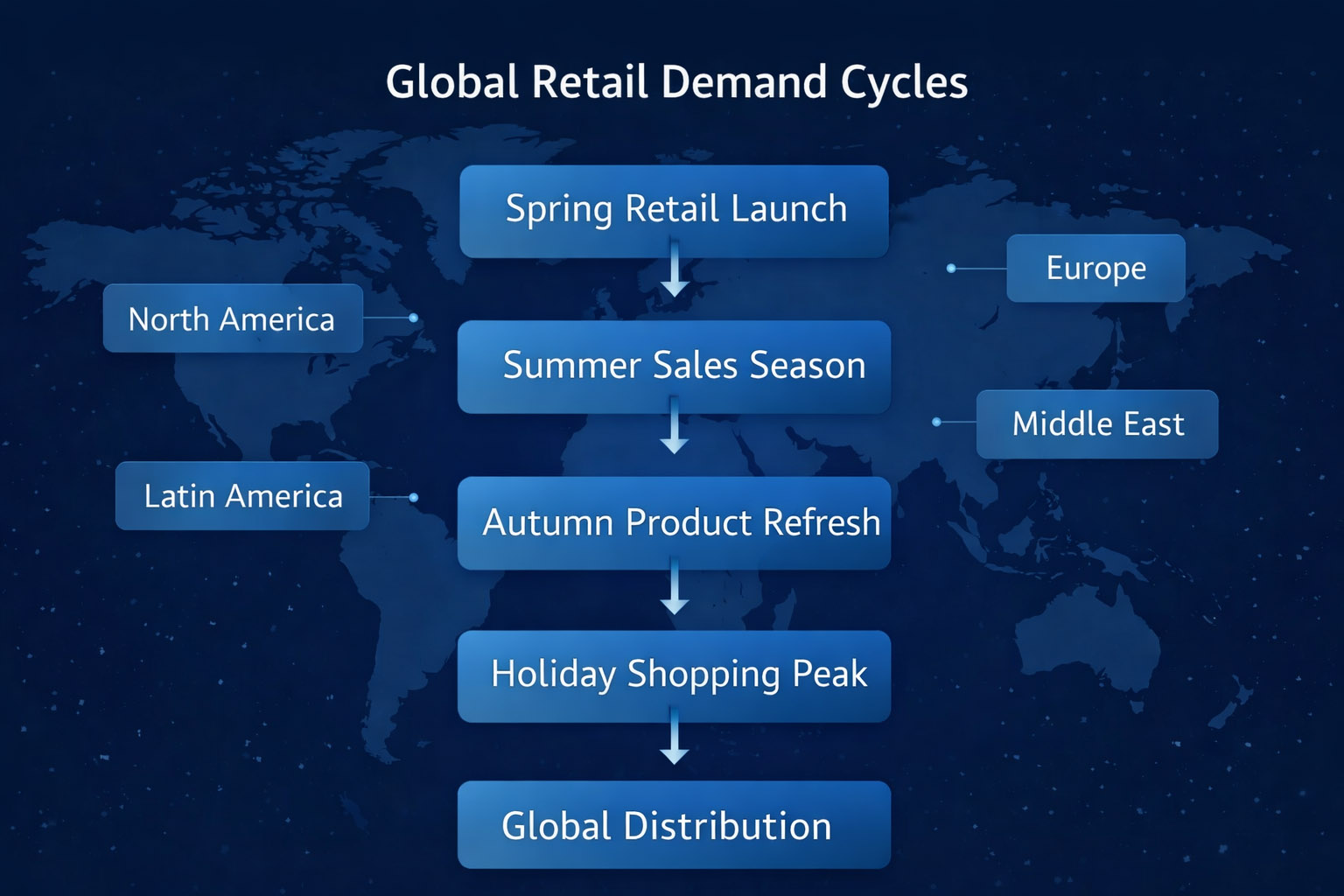
Seasonality is one of the most visible drivers of retail demand. Many product categories experience predictable demand peaks throughout the year. Fashion products, footwear, and accessories often follow seasonal retail calendars that influence wholesale ordering behavior months in advance.
For example, retailers typically increase wholesale purchasing before major retail seasons such as summer launches, holiday shopping periods, or regional promotional events. Wholesale suppliers that anticipate these demand cycles can plan production schedules and inventory allocation more efficiently.
Regional market differences also play a significant role in shaping wholesale demand patterns. Retail cycles in North America, Europe, Latin America, and the Middle East may differ due to climate, cultural shopping seasons, and local consumer behavior.
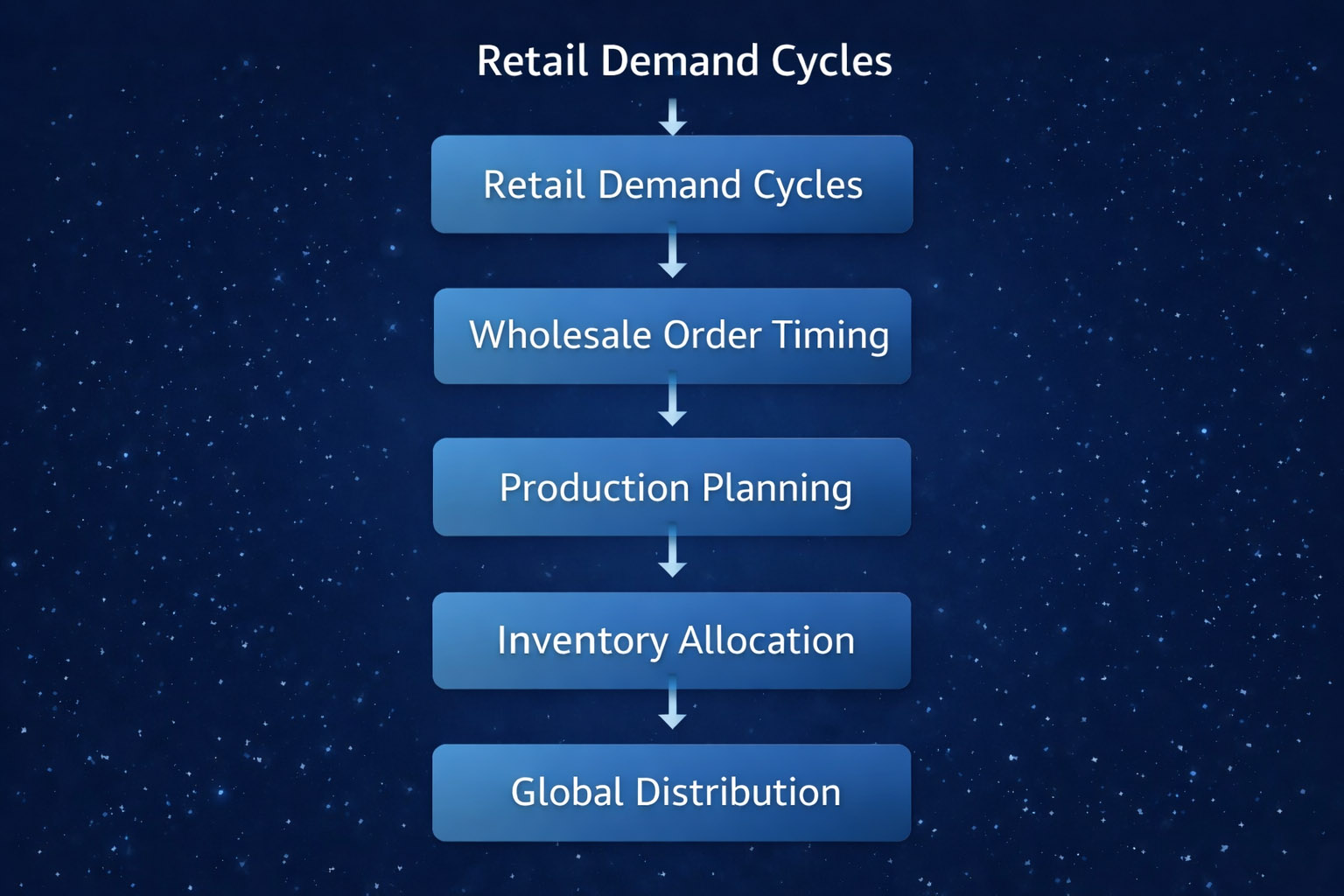
Wholesale suppliers that monitor regional demand trends can better align sourcing strategies and distribution schedules with market expectations. This alignment helps reduce inventory volatility and improves product availability across retail networks.
Market timing is another critical element in wholesale supply planning. Retailers often place wholesale orders based on anticipated consumer demand trends, promotional calendars, and merchandising strategies. Suppliers that understand these timing patterns can synchronize production planning with market demand signals.
When wholesale supply planning is aligned with retail demand cycles, distribution becomes more predictable and operational risks are reduced. Inventory can be allocated more efficiently, production schedules become more stable, and logistics planning becomes easier to coordinate.
Ultimately, global wholesale supply systems perform best when they integrate market demand intelligence with supply chain planning. Businesses that continuously observe retail demand cycles are better positioned to maintain balanced inventory flows and support long-term retail partnerships.
As retail markets continue to evolve, demand-driven supply planning will remain an essential capability for wholesale distribution networks operating across international markets.
⸻